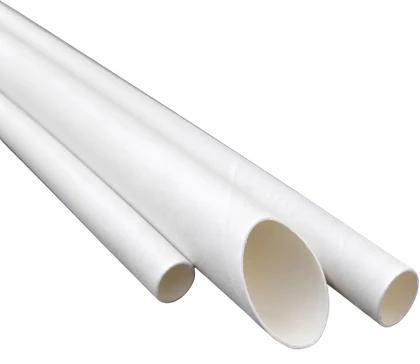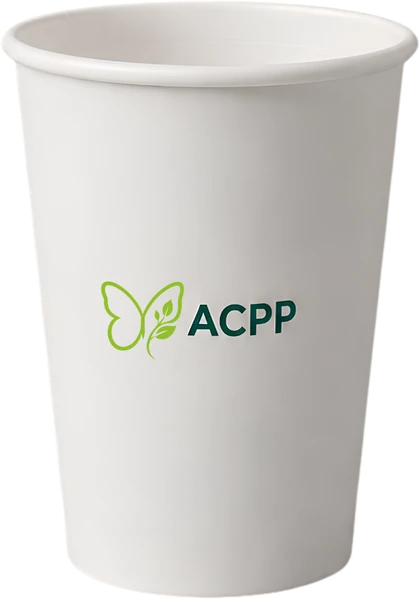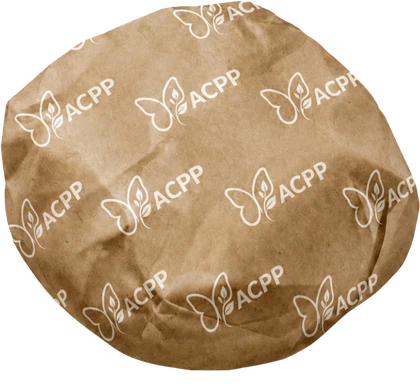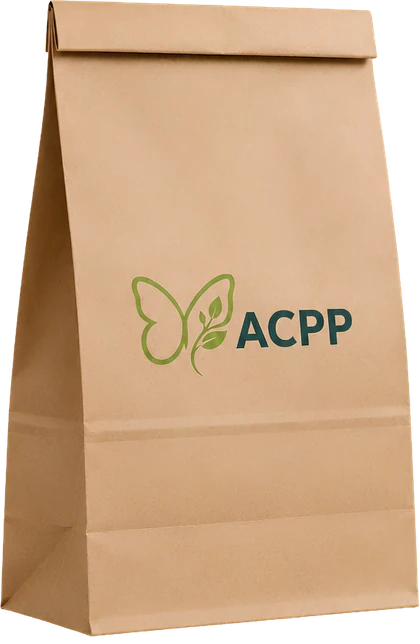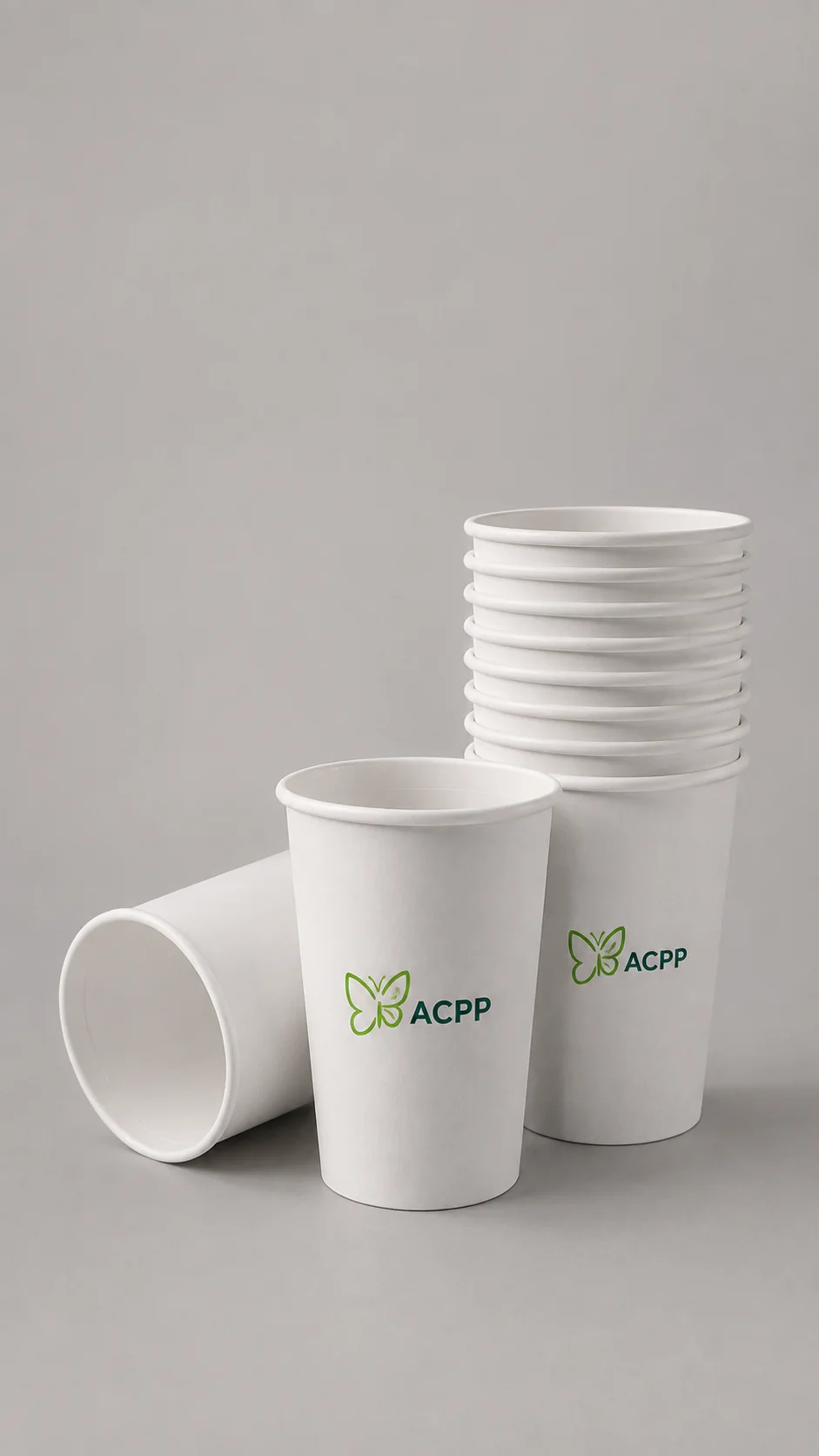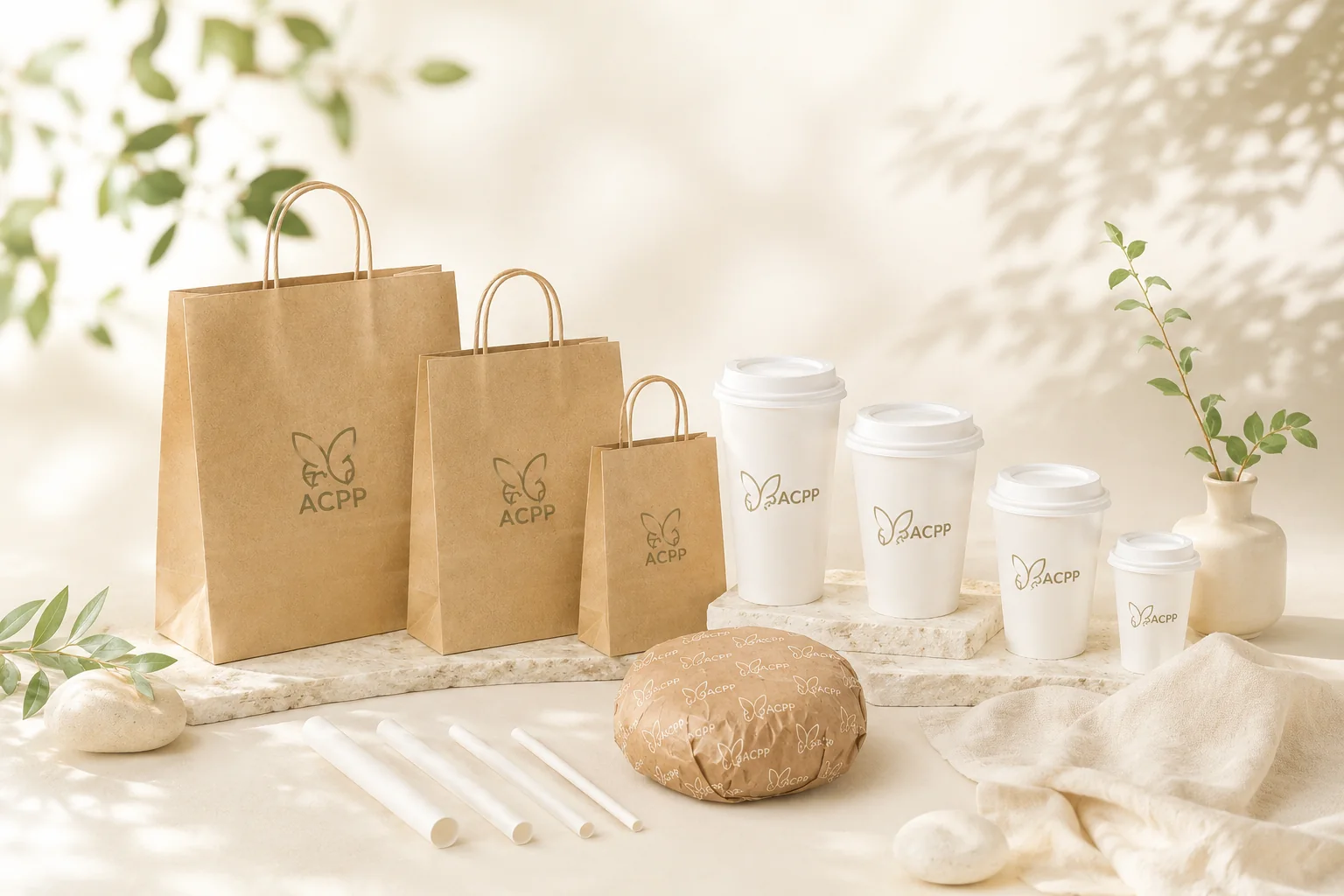



Cups, straws and wrapping paper pressed from plant fiber, with a plant-based barrier instead of a polyethylene lining. Supplied wholesale across the United States.
Not because the material is fake — because of where it ends up. Anything only breaks down where the conditions for breaking down exist, and a landfill is engineered to prevent exactly that. Here is how to read the three words printed on every competing box.
The PFAS figure comes from Boisacq et al., Food Additives & Contaminants, 2023 — an independent third-party study of straw brands sold in Belgium, in which 18 of 20 paper-straw brands tested positive. ACPP was not part of that study and makes no claim about other brands sold in the U.S.
Same fiber, same barrier, same lid diameter. The only thing that changes is how much fits — and how many go in a case. Pick one and we’ll carry it into your quote.
Selected: 16 oz — we’ll pre-fill it in your quote. Shown at true relative scale, so what you see is how they’ll look side by side on your counter.
Request cup pricingPaper straws fail at minute four and everyone knows it. Ours hold their shape through a whole drink — the only sustainability feature a customer actually notices.
Nobody photographs a certificate. They photograph the cup, the straw and the wrapper — which makes your packaging the cheapest media you own.
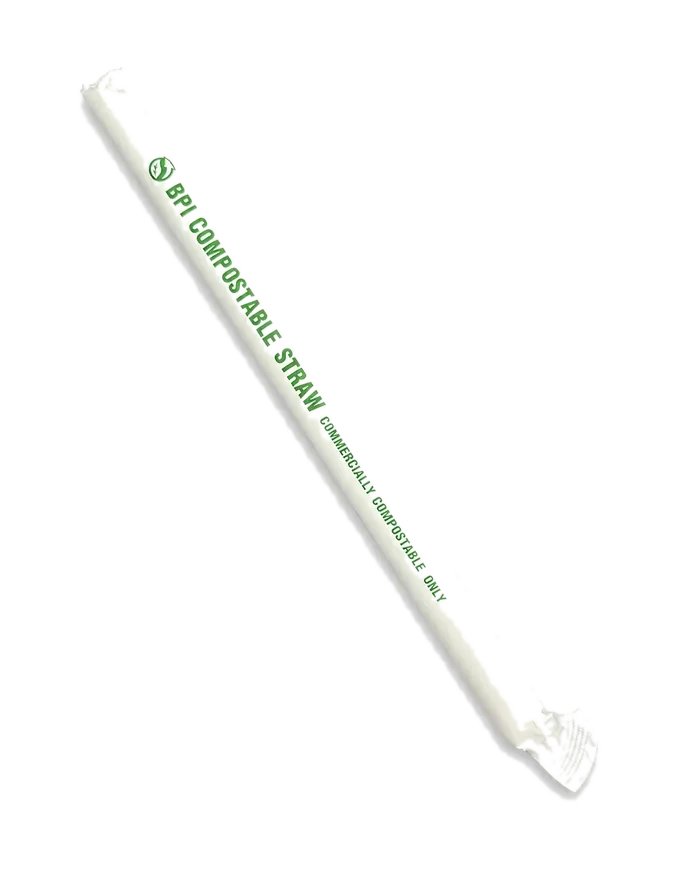
Packed in a kraft tube that goes on the counter as-is. Bulk cases for high-volume service, individually wrapped for grab-and-go.
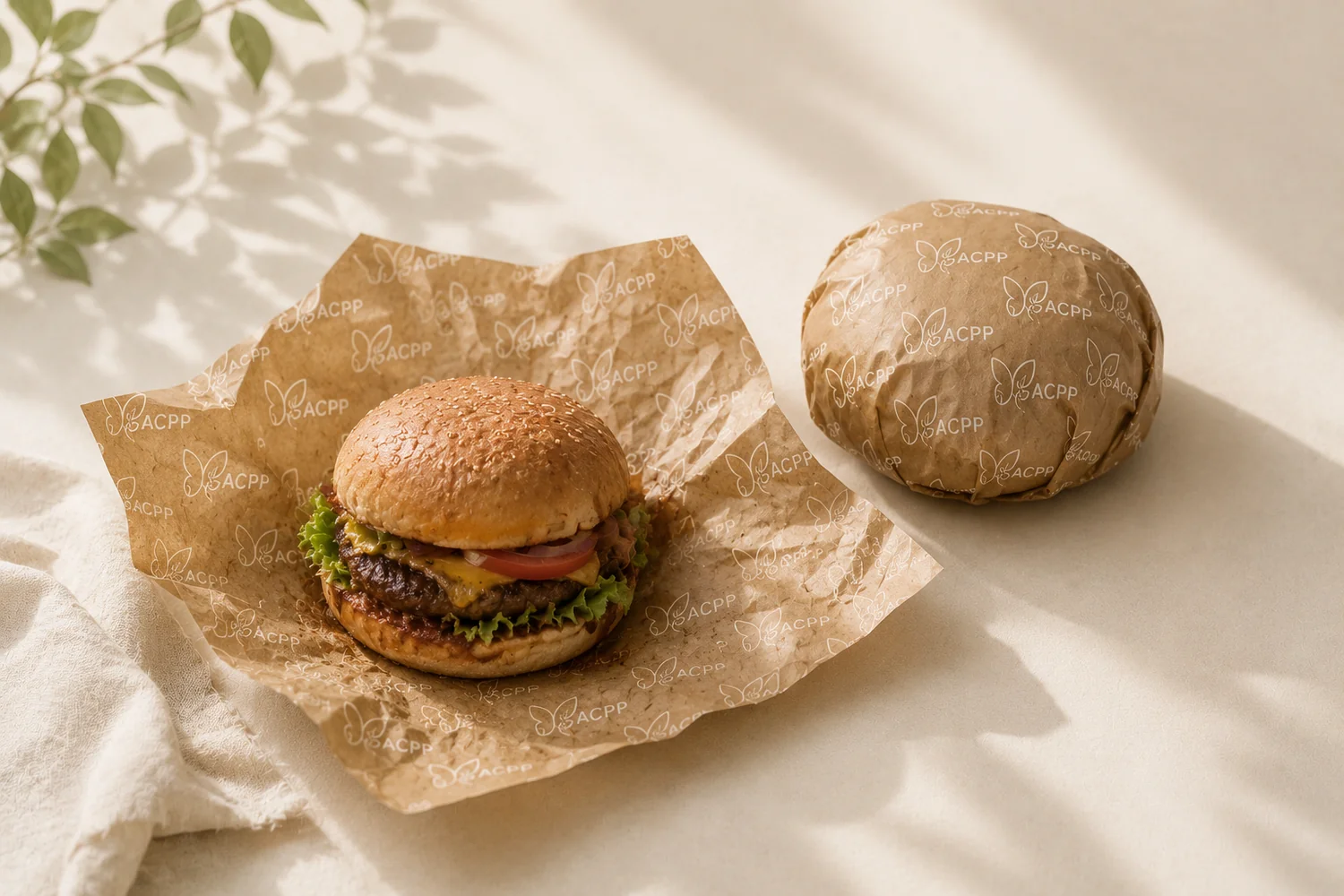
Grease-resistant sheets for burgers, sandwiches and pastries, printed with your logo in a repeating pattern. The wrapper is what the customer photographs.
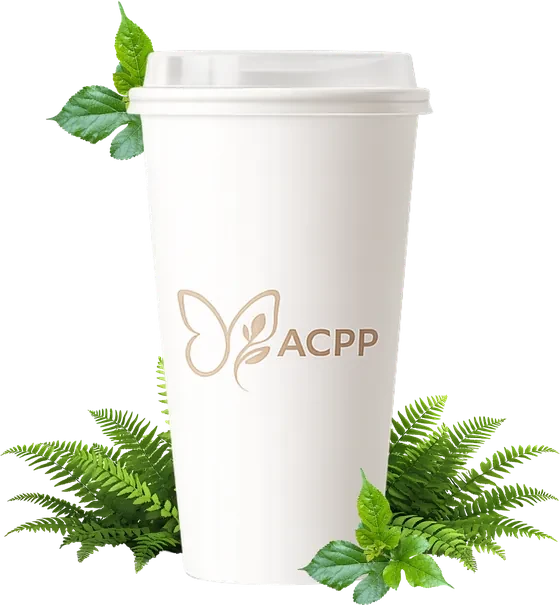
Single-wall and double-wall, with a plant-based barrier instead of a polyethylene lining. One lid diameter across the three sizes.
Dimensions and case counts are indicative and should be confirmed with us before you order. ACPP does not currently hold a product-level compostability certification — see “Where we stand” below for exactly what we do and don’t claim.
The regulation isn’t coming — it arrived. If you operate across state lines, your packaging list is already two lists.
Earth911, state of U.S. plastic bans, February 2026.Extended producer responsibility laws move disposal cost back up the chain. What you put in a customer’s hand becomes a line on someone’s balance sheet.
Earth911, state of U.S. plastic bans, February 2026.The other 91% is in landfills, waterways, or broken into microplastics. “Recyclable” on a label and recycled in practice are not the same number.
Earth911, February 2026.The phase-in started with chains of 20+ locations. From July 2026 it covers all of them — the pattern most states have followed.
Earth911 / Packaging Dive, 2026.Every claim in this category is a claim about a place. Here is ours, without the asterisk.
See where it goesThree honest outcomes, in the order you’d want them. We’d rather you know the third one from us than find it out later.
Sustained heat, moisture and microbial activity — the conditions the material was designed for. This is where a plant-fiber cup becomes compost instead of trash.
A home pile runs cooler and slower. Thin items break down; heavier fiber and the barrier layer take much longer, and may not finish. Don’t promise your customers otherwise.
Landfills are sealed against air and moisture on purpose. Almost nothing decomposes in there on a useful timeline — plant fiber included. The material still avoids adding plastic, but it will not disappear.
The claim, written properly: ACPP products are made from plant-based material and are designed to break down in commercial composting facilities. Commercial composting is not available in every U.S. municipality — check whether a facility accepts foodservice fiber in your area before telling customers a cup will compost. ACPP is a BPI Affiliate Member — a membership, not a product certification. We do not hold a product-level compostability certification, and we won’t print one until we do.
Ask us what we can proveWe would rather lose an order than write a claim we can’t defend in front of a regulator.
On claimsIf a supplier won’t name the disposal route, there isn’t one.
On suppliersA certification is a document, not an adjective. Ask to see it before you print it on your cup.
On proofWhat a thing is made of and where it ends up are two different promises. We make both, separately, in writing.
On languageNone of this is marketing posture. Under the FTC Green Guides, the business that prints the claim carries the liability — not the factory that supplied the stock. So we tell you what we’ve verified, what we haven’t, and which sentences you can safely put on your own packaging. Right now that list is shorter than our competitors’. It is also true.
Ask what we can proveAsk a supplier in this category about certification and you usually get a paragraph about the planet. Here is ours in one line: we hold a BPI membership, not a product certification. We’ll name every material and describe the disposal route — and we’ll tell you exactly where the evidence stops.
BPI Affiliate Member This is a membership badge, not a product certification. It means ACPP supports the Biodegradable Products Institute’s work on compostable packaging. It does not mean any ACPP product has been certified compostable — and we won’t let anyone read it that way.
ACPP is looking for distributors who already sell into cafés, restaurants and offices. You know the accounts and the delivery routes; we supply the product, the material breakdown and the claim language that keeps everyone out of trouble.
States you cover and the kind of accounts you already serve.
Real stock across all three lines. Run it through a full service shift.
Tiered per case, with the full material breakdown for every SKU.
Custom-printed cups, straw tubes and wrapping paper for your accounts.
ACPP is a U.S.-based supplier of plant-based foodservice packaging — cups, straws and wrapping paper — shipping nationwide to cafés, restaurants, hotels and offices. Products are pressed or wound from plant fiber rather than petroleum plastic, and are built to break down in commercial composting facilities. Minimum order is 20,000 units.
What separates suppliers in this category is not the material — most of them buy comparable fiber. It is what they will put in writing:
Buyers comparing suppliers should ask all three questions of anyone they shortlist.
Usually not in the way buyers assume. Under U.S. FTC Green Guides, an unqualified “biodegradable” claim means the entire item returns to nature within one year of customary disposal. Landfills are sealed against air and moisture, so almost nothing meets that bar there. The honest claim names the disposal route.
Three outcomes are possible for a plant-fiber cup, and only one of them works:
This is why ACPP writes “built for commercial composting” rather than “biodegradable”, and tells buyers to check whether a facility in their area accepts foodservice fiber.
Many do. A 2023 study by researchers at the University of Antwerp, published in Food Additives & Contaminants, tested straw brands sold in Belgium and found PFAS in 18 of 20 paper-straw brands. Paper is not automatically the safe swap — what matters is what is added to the fiber during manufacturing.
The finding matters for buyers because it breaks a common assumption: that switching from plastic to paper removes the chemistry question. It does not. It moves it.
The practical response is to ask suppliers to name every input rather than to trust the material category. ACPP publishes its material breakdown on request and states plainly that it has not yet commissioned independent PFAS lab testing of its own products — a limit most suppliers leave unmentioned.
Source: Boisacq et al., Food Additives & Contaminants, 2023
Five questions separate a defensible supplier from a risky one: what is the material, what is the barrier, where does it break down, what certifications exist at product level, and what is the minimum order. A supplier who cannot answer the first four in writing is a liability, because the business printing the claim carries the legal exposure.
ACPP supplies all three lines from a single U.S. source, which lets a business consolidate to one purchase order and one set of claim language. Cups run 12 to 22 oz on a shared 90 mm lid; straws come in three lengths; wrapping paper is grease-resistant and printable. Minimum order 20,000 units.
Consolidating matters more than it sounds. Buying cups, straws and wrapping paper from three suppliers means three material breakdowns, three sets of claims and three chances to print something you cannot defend.
Custom print is available on all three, and blank stock ships while artwork is approved.
Fill this in and it opens a WhatsApp message with your details already written. We reply with pricing, lead time and a sample box.
If WhatsApp didn’t open automatically, use the button below.
Email us directlyIncluding the two that most suppliers would rather you skipped.
They are made from plant-based material and are designed to break down in commercial composting facilities. We don’t use “biodegradable” on its own, because on its own it implies the item returns to nature within a year of however you throw it away — and in a sealed landfill, no material does that reliably. What we will tell you is the material, the barrier, and the disposal route where it works.
Partially, and slowly. Home piles don’t hold the temperature a commercial facility does. Thin items go first; heavier fiber and the barrier layer take much longer and may not finish. If your customers ask, the honest answer is “commercial composting, if your city has it.”
No polyethylene lining. The moisture barrier is plant-based, which is what lets the cup break down as one material instead of leaving a plastic film behind. Ask us and we’ll name the barrier material before you order rather than after.
Lower than most people expect — small cafés are a normal customer for us, not an exception. Tell us your monthly volume in the form above and we’ll quote against it instead of pushing you to a pallet.
Yes, on cups, straw tubes and wrapping paper. Custom print has its own lead time and minimum, so most accounts start on blank stock and switch to printed on the second order once the artwork is approved.
We work with distributors by territory. You get tiered per-case pricing, the full spec sheet library, and the option to sell under your own print. Tell us the states you cover in the form and we’ll come back with what’s open.